It’s the holiday season. You went to the mall or the mall-like replacement that’s available in your city or town. You left in one of two ways, both of which made you mad about the mall.
The first way, you couldn’t get enough of the mall. You’re enamored with all the presents you were able to get. No person in your household or extended family or friends or office will not get the perfect present. The Christmas decorations were magnificent and the cute pictures your kid took with Santa will satisfy all of those nosy family members, especially the ones who don’t understand why you’re just now having a kid or why you rave about riding your bike everywhere or why more shops should be downtown and not just at this suburban spot.
If you’re in the Toronto area and you were fortunate enough, you took one of your own with this guy. Maybe you went to the Mall of America for the first time in years and rode the roller coaster, because hey, sometimes these mall thingys have cool stuff! You took the light rail back to downtown Minneapolis in prompt order though. You’ll get all your last-minute stuff from Target on Nicollet Mall. Or maybe it’s actually Michigan Ave in Chicago or on the Plaza in KC (wait the Plaza has Sephora now?). In that sense, you’re mad about the mall and can’t wait to go back. Plus, if you’re here in North Carolina this year like me, it might be raining, but it’s warm out and taking a nice stroll through Friendly Center doesn’t seem so bad. Or you’re in Los Angeles or Florida or somewhere where’s warm and sunny and Santa wears shorts outside the shopping plaza and you’re laughing at all of us rejoicing over a warm Christmas.
The second way you were mad at the mall is more negative. You were fuming the minute you were doing your normal Halloween candy shopping and you ran into that inflated plastic Santa Target insisted on having in the middle of the aisle. It was bad enough you had to go to Target, try as you must, you can’t give out beer to the kids that seem to multiply every year in your streetcar suburb.
Yet, at the central business district of this area, it seems that beer is the only thing sold, other than rotten fruit at the well-meaning farmer’s market co-op and overpriced, but somehow still fancy vintage dresses and antique chairs. You may have felt all self-righteous the week before Thanksgiving, going around to all the mostly empty parking lots and tagging them #blackfridayparking. What you didn’t tell folks is that you did that while your wife and kids were running through the store, growing more and more irritated at the scene on the inside, and at you making them feel stupid for even going inside, instead of helping them get through as quick as possible and even suggesting a nice day after Thanksgiving recipe idea. Because you didn’t just have one Thanksgiving on one day. You had to have two.
Now, it’s just days before Christmas and since you finally decided to get presents, all the local craft vendors are out of those mugs your wife likes. Your kids have to have that thing that only comes from Toys ‘R Us and nowhere else. Two hours before everything closes on Christmas Eve, you arrive back at your car in the back of the parking lot (or if you’re fortunate, the bike rack in front of the main entrance of the mall). You’re skin’s visibly red or at the very least, your body is very tense. You hit your digital device’s walk goal walking the 2.5 mile radius of the mall, but you could use a nice, leisurely ride or walk to relax.
Clunk. The custom mugs you bought for everybody at that one loud kiosk fell out of the cargo basket. All your Christmas presents broke. You’re plenty mad at the mall.
The Wikipedia definition of a mall is any concentration of stores, connected either by a central holiday or some other connector. The North American malls tend to connect on the inside. Malls in other countries tend to connect on the outside. Either way, there’s one key link, that makes this all urbanist, you’re walking, you’re connected, in theory, you’re exchanging goods and services and you’re making meaningful connections. We’re going to assume for the sake of this article, that the mall is any place you go to do your holiday shopping, whether it’s an old downtown or an insane Super Walmart. Many decisions about placing malls, creating parking lots, even if stores will open or close, are made from this time of year, too. See there, not just touchy-feely urbanism, but some hard numbers too.
Yet, other decisions are made too, ones involving family, friends and colleagues. Maybe you made a new work friend and you have plans to ride bikes more in the new year. You made that decision commiserating at the back of the room at the Maggiano’s Little Italy in the far suburb that you had to Uber too. Thankfully, you now how have an Uber partner back to Midtown. One floor of that empty department store is now a handmade craft fair. You took some of your crafty things out there and now you have a few extra pennies (Insert shameless plug, check out some of my crafty prints here). You’re back in your hometown and there’s a bike-sharing station outside the mall, the old downtown might come back alive thanks to its new cycletrack and there’s that Santa trolley that folks have asked when it’s going to run year-round, as a regular bus. Your grandma really loved being able to take it to her favorite grocery and shoe store without driving or having your mom drive her.
May there be a Christmas miracle in your city or town. At your mall, old or new. May all your presents and your presence be received well. And many wishes that your new year’s resolutions of that mall teardown, bikeshare station, reduced parking minimum and hey, let’s be honest, your prefered professional certification (or job of choice) of choice comes through. May you be happy, wherever this holiday brings you.
This year I decided to go ahead and talk about how to buy gifts. I feel this list can be applied to any time a year and any holiday. After all, these things are unique and they’re always greatly appreciated by any urbanist I know. I would ask your urbanist for some guidance because they may want some things more than others. Shall we get started?
Books
Especially textbooks. For the longest time I though like my urbanist practice was dependent on just how much I was able to write and how profound that writing was. Maybe it was because I came from an academic background in studying community and economic development plus having hung around architecture and design departments in the past. I’ve always written books, even before I was writing about urbanism. And so it seems has everybody else that I meet up with at conferences and who actually speaks say conferences. Also textbooks are expensive and if you’re not a student anymore it’s true but not quite starchitect level, you’ll squee anytime you get an actual book.
Experiences
This can be anything from plane tickets hotel gift certificate/rooms, show tickets, food and restaurant gift certificates, and transit passes. As much as you think we already have all the hip urban stuff, again a free ticket to a hot show like Hamilton in New York is super valuable. Bonus points if it’s something like a house tour or a transit tour that’s not normally open to the public or only happens rarely.
Things to Make or Make With
I know this one is really cliché but still who doesn’t like Lego architecture sets or model train sets. For those who are more realistic in their building and making , gift certificates to home-improvement stores, art and craft stores and home design stores as well as museum stores also work well. Or you can buy specific supplies like nice pens, markers, pencils or paper.
Clothing Actually Made for Commuting
This goes beyond a pair of sneakers that match a formal suit. This gets into rain coats that actually wick off water, shirts and pants and skirts that breathe and come with pockets and undergarments that keep things you don’t want to see out of sight. Also, leisure weekend wear like bike kits is nice too. Again, ask your urbanist, but they’ll be glad you’ve considered their commuting habits in the first place.
Donations to Organizations that Support Urbanism
They are probably getting those notices already to donate to their favorite charities related to these different issues and causes. They may also be the type that has everything that we’ve already listed above. So how about just going ahead and sending all good chunk of money to an organization that they care about, namely the one for whom they work. That way, not only do they benefit but their home city and the causes that they care a lot about do as well.
You may notice that I’ve not actually listed places to get these items. I leave it up to you to choose vendors,books, nonprofits, stores and experiences that speak to the even deeper held values of your individual placemaker. I’ve also listed vague categories of items, again, because I want you to still exercise some creativity. Know that you can and will find the perfect gift for your placemaker.
Belk at Four Seasons Mall
IHOP on Hillsborough Street
Two Guys Pizza on Hillsborough Street
Wachovia at Spring Valley Plaza
All these things used to be on the corner of something. All these places are places I made memories in. All of these places are gone or soon to be gone in their current forms. Many of these places are examples of bad architecture, shadinesss of patrons and big conglomerate corporations that increasingly only care about the dollars of these patrons, not their feelings.
Yet, these and many other dead malls and outparcels and big boxes and downtown storefronts are now gone.
As I’ve prepared to move halfway across the country, and as my hometown and college town begin to make major changes, I’ve started documenting what some may think are mundane, ugly parts of physical space. After all, when I come back to Greensboro, Gate City Boulevard will be the official address of so many things, not just changed street signs. That corner of Hobbs and Friendly might be clear-cut. I want to remember things as they were, because change is inevitable.
And about that corner of Hobbs and Friendly. People are mourning the change of that corner for different reasons. What was once five homes, homes that held families and memories, could soon be the Trader Joe’s that we’ve been begging for years. The one that I’m still on the fence about wanting to come to town for this very reason. (Let me add that now that I’ve had the goat cheese and sun-dried tomato ravioli and I swear by the Maple Pecan Granola Cereal they make, I’m sold on them for more than just cookies).
Sadly though, it’s a lost corner. Lost in the sense that the use of it is changing and memories of the corner are gone.
Yet, there will be new memories right? Some new homes are going on the property. I’m sure one will be the first home of a baby, who will grow up to recount their childhood days walking across the street to Trader Joes on one side and to see Santa at Christmas and to pick out their first bike at REI.
Much in the same way I’ll tell stories about my first visits to the carousel at Carolina Circle Mall, Belk at Four Seasons, the map store at Cotton Mill Square, the toy store with the cool trains at Forum IV, the Chic-fil-A at Holly Hill Mall, Marvin’s on Hillsborough Street, the soon to be old IHOP on Hillsborough Street.
This post owes a debt to all the many suburban retail nostalgia blogs and Facebook pages out there. Love ‘em or hate ‘em, for those of us who grew up in suburbia or a Southern city that mimics what those in other regions consider suburbia, these were our places.
I’m starting this book with the market, as without the market, we would not have urbanism. Churches and homes and farms and schools and even some general stores survive and thrive without being in urban areas. You could always walk the terrain of rural areas, as well as navigate with all forms of human transport that have followed. Yet, there’s really no city without a major marketplace. Without the convergence of mass amounts of people to trade their goods. Over the years, this market has gone back into homes, it’s become enclosed inside big boxes and it’s become less about product and more about people. So where do I really stand on this thing I like to call the market?
Today’s post is the first part of my upcoming e-book: A Black Urbanist-Essays Vol. 1. The e-book will launch on December 1, it’s only $10 and there will be a printed version coming. Find out more about the book here.
Does It Matter Who Owns the Corner Store?
Recently, a friend on Facebook asked this somewhat quintessential question: Why don’t black folks own businesses in their own neighborhoods? One commenter to this status mentioned that it may be because we (as in black folks) have forgotten to help our own as we have achieved higher financial goals and wealth.
I personally believe (and I mentioned this in a comment myself) that black folks went through a period where some of the business types in predominantly black neighborhoods were unwanted and unneeded in their eyes. I’ve even had someone who remembers urban renewal in Greensboro tell me that they willingly tore down the neighborhood businesses in hopes of something better.
However, in many cases, that something better never came. I am also cautious of some modern “revitalizations”, especially when the lots have been sitting empty for several years with no vision and no purpose.
Meanwhile, I applaud those who took up the banner of preserving the history, the commerce, and the tradition of ethnic enclaves, of all cultures. I even applaud those of other cultures who have come in and filled up the vacant spaces, either with businesses and services more geared to their cultures. I especially love if they maintained the original businesses’ quality and culture, and improved the original operations.
When community and culture and affordability are respected, then I don’t think it matters who owns the corner store.
Yet, when businesses on these proverbial corners completely forget their legacy and their obligation for service, then they fail. If a shop owner follows its teenage customers instead of offering jobs, then they have failed. If women are looked upon as strange invasive creatures and vice-versa for males, then they have failed. Yes, we need safe space to be ourselves as men and women, but at the end of the day, there still comes a time for mutual respect. Elders should shop for free. It’s this vision of the corner store or business as a service that owners need to undertake.
Ultimately, I think that this obligation is what makes it hard for people to maintain such businesses over a long haul. These businesses are more than stores, barbers or beauty salons. They are sounding boards, mini town squares, and city halls. If you are not ready to be a de facto mayor or community leader, then you best take your business elsewhere. I believe this is why these businesses fall onto those who either want this charge or those who have no other choice but to run this type of business. I think some black leaders (and I’m sure there are others of other ethnic enclaves who feel the same way) who wanted to run a business that would not become every inch of their lives.
So does it matter who owns the corner store? Absolutely. Yet, it’s not a question of what the owners look like on the outside, it’s a question of what they believe on the inside about their community and their business.
Another store we pined for in Greensboro and it finally arrived in April of 2012.
What if that Corner Store is Walmart? Why Can’t it Be Trader Joes
What really determines who owns the corner store is the inability to take risks. Certain stores, you know, the ones that have cheapish stuff, but a somewhat upscale atmosphere, I believe are only taking advantage of what they think youth or boomers with disposable income or some other magical unicorn person will buy and will buy repeatedly. Unfortunately, magical unicorns tend to not have strong political views or bank accounts that hover around or appear to hover around zero. Stores that don’t take risks don’t like cleaning up old parking lots or making sure even the folks who carry EBT cards have the opportunity to have shiny electronics or even just basic food items.
Walmart, however, goes directly after that market. We talk about the exploitation that they do, but there’s a degree of exploitation in the pretty but cheap store market too. They exploit the emotions of those of us who make just enough to spend at least $50-100 at Target each month, 60% of the cart being non-food items that may or may not be adult toys or pure junk. They make us feel better as a town when they show up promising more Salted Caramel Chocolate cookies for cheap. They allow us to buy more clothes, even though those clothes fall apart at the end of the season.
But back to Walmart.They replaced an empty Borders store on a once vital, recently struggling side of Greensboro and whenever I shop there, it’s packed.They are now going into Quaker Village, the one place many of us Greensboro privately wanted Trader Joes to go, had they been willing to spend the funds to revamp the shopping center like the Walmart. But Walmart is the world’s largest retailer, so if it fails, then it’s no big deal. These other retailers, they aren’t as big as we think. Ask Harris Teeter. Yes, the bigwigs got golden parachutes in their deal with Kroger, but everyone else and the name itself took a small hit. If it weren’t for Kroger understanding the impact of the name on the market, then there’s just one more “luxury” name gone away.
I think the lesson learned here is that sometimes, it doesn’t matter what your name is or what your perception is as a store. At the end of the day, it’s all about the bottom line, customers are just props to be lured in like the Pied Piper, with colorful patterned displays and cheap wine.
Which Gets Us to Amazon
There are benefits to the world domination of Amazon. Big box and traditional department stores either step their game up and stay in business or they count their losses and combine forces at one central location, as the Greensboro Belk will do, by going to Friendly Center. I also would like to note here that at one point, Friendly Center was said to be on the rocks. Now, it’s our shining example of that hybrid of the mall and the main street.
Getting back to that hybrid idea for a moment, although I bemoan Raleigh’s North Hills/Midtown gentrification from a housing standpoint, its efficiency is bar none. All the places I love to shop, save IKEA and the Limited are right on site. The best plain wings in North Carolina are right in-house at the Q Shack. I get my chicken quesadilla fix at Moe’s and yes, I still have a soft spot for Chic-Fil-A chicken nuggets, which is conveniently located next to the movie theater, giving me more options besides popcorn for movies. Harris Teeter is now across the very busy Six Forks Road, but so is the brand new North Hills amphitheater and several other fun spots. The crosswalks are long and safe enough, it’s not so bad.
I’d be remiss if I didn’t mention the suckling power of the Great Bullseye, the crown jewel of this setup. What is it really about the store? The Wikipedia entry gives a great nod to the attention to customer experience. When I come to Target, I’m not prompted in-between sad old songs to buy things. (Although, I will interrupt my Target love fest to say that the IKEA’s choice to play disco era jams during my last visit was also spot on. But more on the big blue box in a minute).
Target’s usually a stop after work when I’m tired and I need time to process my day, as well as pick up a few things. I know that most of those things will be there.
Plus, I get entertained by a few wants and for the most part they don’t fall into my cart. Even with the card security issues, Target offers an actual happy experience over crowded spaces, extremely overpriced, but of similar quality clothing, and just the right foods to stock up my pantry. Once again, they are committed to being a part of city life too, with stores in mixed use developments, traditional malls, East Harlem and its new CityTarget concept in the Chicago Loop.
That other big box of weakness, IKEA, does its part to be urbanist and hip to the Amazon Prime crowd. You can actually see what everything looks like, in a real room setup. Now granted, I’m used to this, having grown up a stones throw from the furniture capital of the world and the year-round, well-dressed, showrooms of furniture of real wood and already-assembled craftsmanship. However, how many stores show you how cool your studio apartment really is? How many stores have kitchen and bathroom and office planning consultants on site? And seriously, how many have pillows made of hearts with arms ready for hugs. Sure, you’ll probably need lots of hugs after you finish putting together all that furniture, but they’ve also made sure you ate well coming in and out of the door.
Like all for-profit companies, including that Amazon, there have been issues with labor, poor products, poor customer service and once again, that many of these stores are always in driving distance. Yet, they do deliver. This, is what makes IKEA and Target, in my opinion, the department stores that will lead the way as we become more digital and return to the traditional main streets from the malls and the box stores.
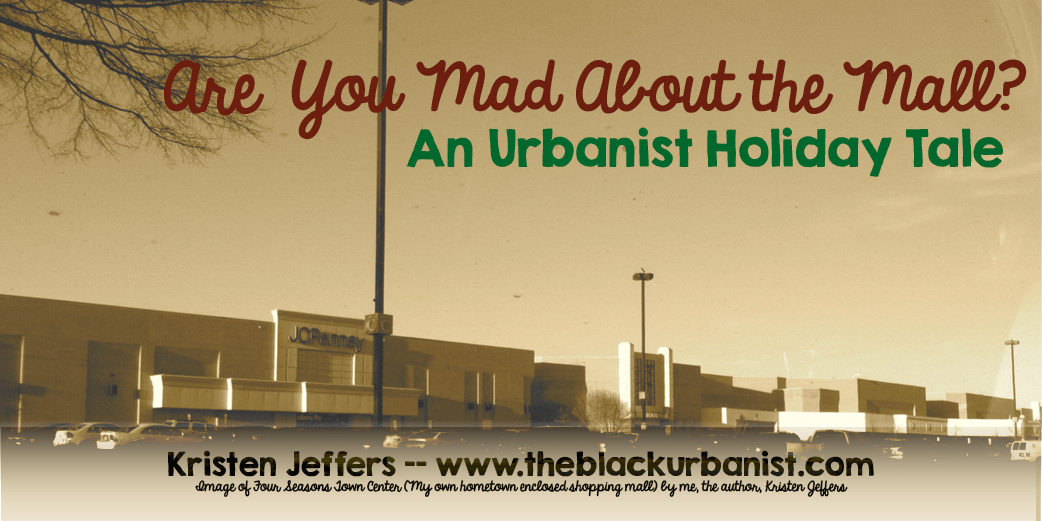
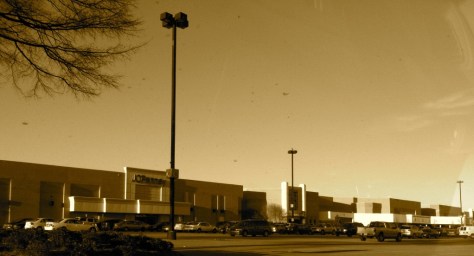
I know I put this picture into sepia, but the mall isn’t quite dead yet.
Don’t Sleep on the Mall Though
Say the words mall and main street and two very different images come up. I’m going to guess the former image involves neon signs, fountains and Sbarro, while the latter may also include a fountain, but a barber pole and Sheriff Andy Taylor. Well, until recently,when popular acceptance of new urbanist principles created a hybrid of the two in many areas, which is a revival, not a hybrid.
Much of my urbanism is informed by a love for the traditional enclosed mall. And like the love I have for my city, it is a tough love. After all, it depends on whether I really need to buy a bunch of clothes, or a Cinnabon, since that’s all that seems to exist at these structures these days. Once upon a time though, I lived for the weekend trip to The Disney Store and Waldenbooks. I find more comfort these days on “main street”, called Elm Street here in Greensboro. I like that there are multiple types of businesses, fresh air, and a culture of people just coming to hang out and fellowship, not just spend money on objects.
Yet, the truth is that I could probably stick to my budget and do all my ordering of things on Amazon and have a good time at an-all inclusive beach resort. Retail is retail is retail right? As long as there’s a product and an exchange of currency, all forms of shopping are the same right? Why then, should I (and in turn you) be concerned with the keeping of our shopping districts, no matter the form?
First, because for so many communities, even the reviled inclosed mall creates community. Many people have shied away from malls, citing too many_______ people (Fill in the blank however you please). However, for those ______ people, the mall does keep them out of trouble , provide a source of employment, a safe place to walk, and of course clothes and Cinnabons. Also, for small business owners, older enclosed malls and strip centers provide cheap office and storefront space that can help them create a livelihood, and in turn, create opportunities for their families and the greater community.
Other older malls have reinvented themselves as churches, libraries, schools, indoor farms and food markets. Likewise for main streets in smaller towns and cities that were once areas of empty shells and blight, but have been brought back to life. A bonus for the main streets is that many of the buildings were built in an era where quality was king and time was taken to create structures that not only last, but have lots of architectural character.
Secondly, dead real estate is dead real estate, no matter the location. As we learned in Retrofitting Suburbia and the Sprawl Repair Manual, even if it started as sprawl, going back to fix it can re-ignite the community and keep a neighborhood from going into further decline. Going back to imagining things, I see a montage of main streets going from the heyday of the mid 20th century, to the late 20th century abandonment and neglect, to the indie stores and street festivals and new apartments of today. If we can fix main street, we can fix the enclosed mall and make it a proper community center too.
Third, not everyone will understand or find benefits in online shopping. It’s still best to try clothes on and handle fruits and vegetables before you purchase them. I remember the one time I bought shoes online, I ended up with major blisters and a weird gait on a day where walking really mattered (my graduation day from NC State). Plus, who can deny how well a human touch can make even the worst product the best in the world.
Closing this Store, For Now
Even though I’ve said that the mall is probably dead, I also believe it does matter who owns the corner store. Retail is a strange animal, but where would we be without it? This is where I give props to the homesteaders who seem to have answered that question. Meanwhile, for the rest of us, onward and upward to Target and IKEA.
Would we be people without commerce and a marketplace? Maybe, if we go full on into a marketplace of ideas. Would we be urbanists though? Probably not.
This post is part of #NaBloPoMo, an effort to post on blogs every day throughout the month of November. Find out more about it here. Also, if you would like to pre-order A Black Urbanist, you can here. Since this isn’t Amazon, all proceeds come right to me and you get it in a PDF that can be read in any format.
So we’ve spent all week talking about the nature of retail. Yet, today’s videos represent how much retail is a cycle, where America has led the way in sprawl, yet is now realizing why it’s not such a good idea. The first video is a montage of America’s dead malls, with voiceover that directly addresses how they are now being exported overseas and overbuilt just like in the US. That video and voiceover, by Scottish writer Ewan Morrison, is part of a greater collection, Tales from the Mall, which was released in 2012 (paperback coming this September) and highlights all that goes into running a shopping mall through fiction, nonfiction, journalistic reports, photo collages, and in the e-book version, links to videos, such as the one seen here. The second video is an advertisement for one of these new international malls, that seems to just be a dubbed over advertisement for an American mall.
And with that, we close our chapter on retail for now. I’ll see you on Tuesday as we get ready for Buffalo and CNU 22.
Placemaking is not just creating experiences, but pushing for necessary services and goods to be purchased as close as possible to home. What kind of places then, do we all want to shop at, at least those of us who are concerned with the effects of sprawl, fair labor, humanely raised food and fibers and a sense of classic customer service. Scratch want, what kind of places do we need to shop at, to fulfill our values and soothe our senses? After all, so much of consumption in the modern era is geared towards soothing our feelings and wants, more so than what we actually need. If we were really truly concerned about consumption, we’d all be homesteading. Yet, that’s not to say that those of us who choose to live a little more urban than rural are not responsible, nor valid in our thoughts of more responsible retail. How do we balance the sense of place, the sense of responsibility and the sense of consumption?
Street Markets/Farmers Markets/Commerce Vehicles
Taking things back to the classic form of the marketplace, where people open up their cars, put out tables, hold out signs and pitch tents to pitch their wares, often in the open air. The start-up costs for the sellers are low, plus, they enjoy the flexibility of driving around from neighborhood to neighborhood and town to town, finding the places where people purchase from them the most. In addition, a community often forms around these markets. There’s the scarcity of knowing that you can only find that particular table or truck at that particular place for a limited amount of time, much like all those TV advertisements with the 1-800 number. Yet, you also get to know the people behind the product, the ones with the family recipes and the desire to help others and themselves build a better community one booth at a time. Also, this is where some of the restrictive regulations on signage and placement help. If a product or service is good enough, they break though the restrictions and become a need, not a nuisance.
Older Streetcar Suburb or Village-Style District
A new study by the National Trust for Historic Preservation divided up DC, San Francisco and Seattle by block and analyzed spending and traffic patterns. It found that in older, village-style districts stores stay open later, more venues, such as performance spaces or bars are open later, people utilizing tend to be younger and more energetic and the cost for doing business is lower for entrepreneurs. Many may resent commercial encroachment in some of these neighborhoods, but if businesses are forced to keep a small footprint, then they are more likely to interact with those people already in the community, because they as companies have to reach out for additional resources.
Showrooms
I see this as a way that the big box stores can get back in the urbanist social graces. Yes, have a big distribution center, but only out by existing interstate spurs that actually connect states and not loops. Let the cities, towns and villages be spaces where people get to know samples of your products or touch the items like fruit and dairy that have a high expiration date. Here they can try on the clothes of your brands, and then know their exact measurements, to then pull out smartphones and put in a regular recurring shipment of slacks or shift dresses. They can also get to know new products and come talk to a person to ask questions and raise concerns about product quality or usage.
Home Delivery
The other way that box stores and major scale commerce can get back into a more personal style of selling. Piggybacking on the showcase above, if a person knows what size they are, and how much of a non-perishable food item they need, then why not go ahead and ship it to their home. Take the costs of displaying items on a large level and put that back into direct-to-home shipping. Encourage people to purchase on a monthly or quarterly basis in large quantities, so that not only they can budget for your store’s goods, but you can also know exactly what to expect in income and expenses, reducing the anxiety of knowing where and when a market or a customer base will show up. Also, if you offer installation or any other type of services, you help the customer by taking some of the work of using your product away from them.
Budgeting
This is the final piece of responsible, experience-based retail. When a person budgets, they take into account when certain vendors are around, when delivery is scheduled to come with other goods and they know approximately how much they need to spend. Likewise for businesses, it helps the cash flow accounts of businesses who know exactly when money is coming in the door. For those who are in the village/mobile model of retail, it helps keep overhead expenses down as you determine where to settle and where to travel.
Further Applications and Final Thoughts
The main caveat to all these methods is spontaneity. What if you want to try something new? How do you discover new things? What if production and processing costs go up? This is where communication and trust are vital. Make it easy, if you are in the showroom/delivery model, for people to cancel, as well as see when products change prices or if products are running low. Or, if you have new customers for products, help them see the process of getting these products to them and explain why it may take longer for others to show up.
For those in the village/mobility model, people can make the choices for themselves not to show up. If a neighborhood or district doesn’t support you as a business anymore, you can always pack up and move somewhere else, until you find yourself stable enough to establish roots and maybe even expand into the showroom/delivery model.
To conclude, this represents a radical reorganization of how we purchase. Yet, this reorganization has already began in many markets and is the only thing keeping others afloat, especially in a world where Amazon could be the only showroom, leaving all others to forge smaller footprints if they want something more personal or customized. It also calls upon retailers themselves to form different alliances and collectives.
How would you add a sense of place back into activities of commerce?
Coming to the end of the maze that is IKEA. Satisfied and with a full yellow bag. And yes, it’s blurry on purpose. Tell me I’m not wrong for feeling this way at the end of an IKEA trip. Image by the author.
As of this writing, I’ve just learned that the Belk at the Four Seasons Mall, the last remaining enclosed mall in Greensboro, will close at the beginning of 2015. I fully expect two things at that mall. One, it will go the way of the Carolina Circle Mall, our other enclosed mall and be torn down and replaced with a super Walmart. Or two, it will be rebirthed à la North Hills in Raleigh, JC Penney in tact and Target attached.
My theories are leaning towards the later. Walmart Neighborhood Market just arrived in the space of an old Borders (which was doing well until the chain itself went under), that’s just about a half-mile away and it seems to be happy and doing fine. As of this writing, I have investigated this claim in person, and walked out with a large tub of sea salt caramel ice cream. There are benefits to the world domination of Walmart.
Likewise, there are also benefits to the world domination of Amazon. Big box and traditional department stores either step their game up and stay in business or they count their losses and combine forces at one central location, as the Greensboro Belk will do, by going to Friendly Center. I also would like to note here that at one point, Friendly Center was said to be on the rocks. Now, it’s our shining example of that hybrid that I mentioned of the mall and the main street.
Getting back to that hybrid idea for a moment, although I bemoan the new North Hills’s gentrification from a housing standpoint, its efficiency is bar none. All the places I love to shop, save IKEA and the Limited are right on site. The best plain wings in North Carolina are right in-house at the Q Shack. I get my chicken quesadilla fix at Moe’s and yes, I still have a soft spot for Chic-Fil-A chicken nuggets, which is conveniently located next to the movie theater, giving me more options besides popcorn for movies. Harris Teeter is now across the very busy Six Forks Road, but so is the brand new North Hills amphitheater and several other fun spots. The crosswalks are long and safe enough, it’s not so bad.
I’d be remiss if I didn’t mention the suckling power of the Great Bullseye, the crown jewel of this setup. Just look at this map of how Target has grown over the years. The sad part is that map stops at 2008. I’m sure the map is completely red at this point. What is it really about the store? The Wikipedia entry gives a great nod to the attention to customer experience. When I come to Target, I’m not prompted in-between sad old songs to buy things. (Although, I will interrupt my Target love fest to say that the IKEA’s choice to play disco era jams during my last visit was also spot on. But more on the big blue box in a minute).
Target’s usually a stop after work when I’m tired and I need time to process my day, as well as pick up a few things. I know that most of those things will be there. Plus, I get entertained by a few wants and for the most part they don’t fall into my cart. Even with the card security issues, Target offers an actual happy experience over crowded spaces, extremely overpriced, but of similar quality clothing, and just the right foods to stock up my pantry. Once again, they are committed to being a part of city life too, with stores in mixed use developments, traditional malls, East Harlem and its new CityTarget concept in the Chicago Loop.
That other big box of weakness, IKEA, does its part to be urbanist and hip to the Amazon Prime crowd. You can actually see what everything looks like, in a real room setup. Now granted, I’m used to this, having grown up a stones throw from the furniture capital of the world and the year-round, well-dressed, showrooms of furniture of real wood and already-assembled craftsmanship. However, how many stores show you how cool your studio apartment really is? How many stores have kitchen and bathroom and office planning consultants on site? And seriously, how many have pillows made of hearts with arms ready for hugs. Sure, you’ll probably need lots of hugs after you finish putting together all that furniture, but they’ve also made sure you ate well coming in and out of the door.
Like all for-profit companies, including that Amazon, there have been issues with labor, poor products, poor customer service and once again, that many of these stores are always in driving distance. Yet, they do deliver. This, is what makes IKEA and Target, in my opinion, the department stores that will lead the way as we become more digital and return to the traditional main streets from the malls and the box stores.
All this to say that the Four Seasons Mall will not die from this announcement. It has a major Sheraton hotel and convention operation in its parking lot. It has one of those other hip for the digital age stores, H&M, which just moved in a little less than a year ago. It has lost and regained its movie theater, a major way of bringing traffic in that doesn’t involve the consumption of objects as much as it does the experience. The Greensboro Coliseum is only a mile away and it’s the bookend to the city’s new effort to revitalize and reinvigorate the soon to be Gate City Boulevard corridor. Its formal name is now the Four Seasons Town Centre, which would make it easy for someone like General Growth Properties, who currently owns the mall, to convert and market it in a manner similar to its Durham mall, The Streets of Southpoint, once the demand and demographics change. Even now, with its frontage onto I-40, it can still function as a great regional mall and destination, like it has in the past.
Yet, all these ideas put revitalization and customer service in the hands of the companies. How does placemaking and tactical urbanism deal with retail and purchasing needs? Stay tuned.
Say the words mall and main street and two very different images come up. I’m going to guess the former image involves neon signs, fountains and Sbarro, while the latter may also include a fountain, but a barber pole and Sheriff Andy Taylor. Well, until recently,when popular acceptance of new urbanist principles created a hybrid of the two in many areas, which is a revival, not a hybrid.
Much of my urbanism is informed by a love for the traditional enclosed mall. And like the love I have for my city, it is a tough love. After all, it depends on whether I really need to buy a bunch of clothes, or a Cinnabon, since that’s all that seems to exist at these structures these days. Once upon a time though, I lived for the weekend trip to The Disney Store and Waldenbooks. I find more comfort these days on “main street”, called Elm Street here in Greensboro. I like that there are multiple types of businesses, fresh air, and a culture of people just coming to hang out and fellowship, not just spend money on objects.
Yet, the truth is that I could probably stick to my budget and do all my ordering of things on Amazon and have a good time at an-all inclusive beach resort. Retail is retail is retail right? As long as there’s a product and an exchange of currency, all forms of shopping are the same right? Why then, should I (and in turn you) be concerned with the keeping of our shopping districts, no matter the form?
First, because for so many communities, even the reviled inclosed mall creates community. Many people have shied away from malls, citing too many_______ people (Fill in the blank however you please). However, for those ______ people, the mall does keep them out of trouble , provide a source of employment, a safe place to walk, and of course clothes and Cinnabons. Also, for small business owners, older enclosed malls and strip centers provide cheap office and storefront space that can help them create a livelihood, and in turn, create opportunities for their families and the greater community.
Other older malls have reinvented themselves as churches, libraries, schools, indoor farms and food markets. Likewise for main streets in smaller towns and cities that were once areas of empty shells and blight, but have been brought back to life. A bonus for the main streets is that many of the buildings were built in an era where quality was king and time was taken to create structures that not only last, but have lots of architectural character.
Secondly, dead real estate is dead real estate, no matter the location. As we learned in Retrofitting Suburbia and the Sprawl Repair Manual, even if it started as sprawl, going back to fix it can re-ignite the community and keep a neighborhood from going into further decline. Going back to imagining things, I see a montage of main streets going from the heyday of the mid 20th century, to the late 20th century abandonment and neglect, to the indie stores and street festivals and new apartments of today. If we can fix main street, we can fix the enclosed mall and make it a proper community center too.
Third, not everyone will understand or find benefits in online shopping. It’s still best to try clothes on and handle fruits and vegetables before you purchase them. I remember the one time I bought shoes online, I ended up with major blisters and a weird gait on a day where walking really mattered (my graduation day from NC State). Plus, who can deny how well a human touch can make even the worst product the best in the world.
Lastly, even though I’ve said that the mall is probably dead, I also believe it does matter who owns the corner store. Retail is a strange animal, but where would we be without it? This is where I give props to the homesteaders who seem to have answered that question. Meanwhile, for the rest of us, onward and upward to Target and IKEA.
This week’s #throwbackthursday post piggybacks on recent statements by the RZA, a member of the Wu-Tang Clan. In an interview with the website Shadow and Act, he stated that gentrification is just the natural order of things. He also mentioned that people have to learn how to utilize it. The context of this interview was to discuss his role in the upcoming movie Brick Mansions, about a walled off housing project in a slightly dystopian Detroit. Between that and other prominent remarks from celebrities on gentrification lately. I saw fit to have us revisit my thoughts on who should own the corner store from September of 2012. Also, check this out this article by friend of the blog Alexandra Moffett-Bateau, where she studied women in a public housing development who exercised political power not against the government itself, but a corner store that was overcharging for basic food and refusing to take food stamps. With that, I hope everyone has a great holiday weekend! See you on Monday.
Recently, a friend on Facebook asked this somewhat quintessential question: Why don’t black folks own businesses in their own neighborhoods? One commenter to this status mentioned that it may be because we (as in black folks) have forgotten to help our own as we have achieved higher and higher financial goals and wealth.
I myself personally believe (and I mentioned this in a comment myself) that black folks went through a period where some of the business types in predominantly black neighborhoods were unwanted and unneeded in their eyes. I’ve even had someone who remembers urban renewal in Greensboro tell me that they willingly tore down the neighborhood businesses in hopes of something better.
However, in many cases, that something better never came. I am also cautious of some modern “revitalizations”, especially when the lots have been sitting empty for several years with no vision and no purpose.
Meanwhile, I applaud those who took up the banner of preserving the history, the commerce, and the tradition of ethnic enclaves, of all cultures. I even applaud those of other cultures who have come in and filled up the vacant spaces, either with businesses and services more geared to their cultures. I especially love if they maintained the original businesses quality and culture, and improved the original operations.
When community and culture and affordability are respected, then I don’t think it matters who owns the corner store.
We underrated, we educated
The corner was our time when times stood still
And gators and snakes gangs and yellow and pink
And colored blue profiles glorifying that…
The corner was our magic, our music, our politics Fires raised as tribal dancers and war cries that broke out on different corners Power to the people, black power, black is beautiful…
The corner was our Rock of Gibraltar, our Stonehenge Our Taj Mahal, our monument, Our testimonial to freedom, to peace and to love Down on the corner... Common featuring The Last Poets, The Corner, 2005
Yet, when businesses on these proverbial corners completely forget their legacy and their obligation for service, then they fail. If a shop owner follows its teenage customers instead of offering jobs, then they have failed. If women are looked upon as strange invasive creatures and vice-versa for males, then they have failed. Yes, we need safe space to be ourselves as men and women, but at the end of the day, there still comes a time for mutual respect. Elders should shop for free. What about GLBTQ folks and their needs? It’s this vision of the corner store or business as a service that owners need to undertake.
Ultimately, I think that this obligation is what makes it hard for people to maintain such businesses over a long haul. These businesses are more than stores, barbers or beauty salons. They are sounding boards, mini town squares and city halls. If you are not ready to be a de facto mayor or community leader, then you best take your business elsewhere. I believe this is why these businesses fall onto those who either want this charge or those who have no other choice but to run this type of business. I think some black leaders (and I’m sure there are others of other ethnic enclaves who feel the same way) who wanted to run a business that would not become every inch of their lives.
So does it matter who owns the corner store? Absolutely. Yet, it’s not a question of what the owners look like on the outside, it’s a question of what they believe on the inside about their community and their business.
Malls are dying. Yes, there are stores that drive traffic, but I can’t tell anyone the last time I’ve been to an enclosed mall or even to mall stores at an open-air center. Well, I lie, I went to Barnes and Noble the other week. I have a gift card to spend there, but I was more interested in absorbing the atmosphere than purchasing anything particular that day. I’ve definitely not eaten at a food court in years, so the bankruptcy of Sbarro was not a shocker to me. And yes, I’m in the 18-34 demographic that has a little extra money to spend.
Much is said about demographics of shoppers by chain owners and other shoppers who don’t like a particular demographic that happens to be taking in the atmosphere versus buying things. Or so they think. Anecdotally, I’ve found that poorer people, women and teens, especially of color, are more likely to buy mall things, even at the upscale places. Most of the people I know with extra income have stuff shipped to them online, call the grocery and have them shop for them (or shop in person with a tight list), or spend money on experiences over things.
Therefore, malls of any type (including the lifestyle center reboot), should continue to tout the experience. I’m kinda disappointed that JC Penney never finished the reboot described here, where they wanted to mimic a main street in their store and have events that didn’t require you to shop. They would still make money, because they would still be a showcase and occasionally there are still things to buy. I would go to the mall more often if it was an oversized showroom, with kiosks for shipping directly to my home and opportunities to do things versus buy things. And we’ve done this showroom/catalog thing before. Hello Sears Wish Book. Anyway, your weekend may include mall shopping. Mine will include the news below:
Asheville and Buncombe County are reviewing the I-26 improvement plan.
Charlotte’s new apartments on the Dillworth end with connect Dillworth with Uptown in a more urban manner.
US Airways will add more US flights out of Charlotte-Douglas.
Fayetteville’s police chief is under internal investigation.
A Wells Fargo Economist claims that technology is booming, but RTP is not where it’s booming from.
If you have an AT&T phone, the Durham 911 Center will accept your emergency texts.
Mixed feedback from citizens to the Durham City Council on their proposed new police headquarters.
The DENR is now rejecting the plan for the coal ash cleanup it worked so closely with Duke Energy to create.