Mixed-Use Ain’t Always Pretty

Let's not fall into the trap that mixed-use is only a building code or type.

O ver the last couple of weeks I was made aware of the attempts by a community in Raleigh to determine once again, what they think looks right in a community. As far as I know, the accessory dwelling battle continues to happen in Raleigh and it’s cranked up again in DC. This latest situation is a bit different.

A woman wanted to take advantage of state funding for those who are willing to take care of developmentally disabled people. She built a staircase onto the exterior of her home in order to comply with state-mandated safety regulations for people who operate state-funded homes for disabled people.

Yet, her neighborhood association has slapped her with fines and demanded she tear down the staircase. All the usual arguments are there: property values, appearances, etc. Yet, to me, it speaks again to how housing and building codes, as well as incentives for a certain style of neighborhood, are pushing communities backward.

Communities are more than their buildings. If people can’t learn, make a living, raise a family, worship, or entertain themselves in a neighborhood, then there’s a problem. Even if one of the above is missing, one should still be able to have a link, that they don’t have to drive themselves or fill up with expensive fuel, to get there.

Furthermore, if we want to bring back the element of freedom to the American Dream, why are homeowners so worried about structural elements or even the appearance of more traffic or people than a house normally holds? Why do areas such as this one in Brooklyn get taken out by developers even though they are wildly successful? This is even more problematic in New York, as there are more connections to areas that have a different mix of retail. If urban planning at it’s core was began to deal with sanitation issues, then why has it evolved into or maintained elements that declare situations such as an abundance of working class occupations, housing, and businesses a nuisance? Let’s not even get started with the racial inequities built into what’s known as urban planning.

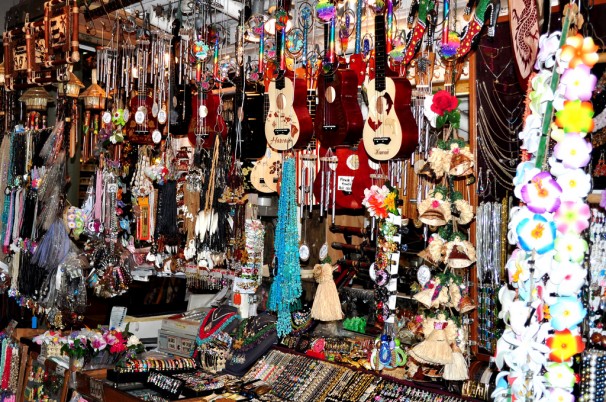
Yet, at the end of the day, we have to remember that mixed-use, which I’m going to define here simply as a community with multiple activities and types of activities, isn’t always pretty. The successful shopping district may not look like Michigan Avenue in Chicago. A home-based business may require an oddly placed staircase instead of an extra cell phone line. A granny pod in your backyard may be your only solution to age in place and next to your children and grandchildren.

Time is up for us to privilege looks over function. Especially if we expect everyone to buy into the “back to the city” placemaking movement and stop harassing those who don’t fit the mold of what neighborhoods should look like.

Image by Flickr user Shards of Blue.

Tags: , , ,

The Black Urbanist is written by me, Kristen E. Jeffers. I hold a Master of Public Affairs focused on community and economic development from the University of North Carolina Greensboro, which I just finished in May of 2012. I graduated with a Bachelor of Arts in communication with a concentration in public relations from North Carolina State University in 2007. My main gig is being the Public Affairs Officer for the North Carolina Humanities Council, which I also started in May of 2012. I released my first e-book, "Killing the Civic Inferiority Complex" in May of 2012. In May of 2011 I presented at my first CNU NextGen on Cultural Urbanism. At the 2012 CNU, I debuted the concept of the Civic Inferiority Complex. Also in 2012, I spoke at the UNC Global American South conference on the reverse migration of African Americans. I am a featured contributor to "The Atlantic Cities" and "Sustainable Cities Collective." I have also contributed articles to "Grist", "Next City", "Better! Towns and Cities", and "Urban Escapee."
pub-8897335176358686
  • http://twitter.com/blackurbanist/status/291170882670428161/ Kristen Jeffers (@blackurbanist)

    Mixed-Use Ain’t Always Pretty http://t.co/vP4FzWUt #cities #familyandplace #issuesandideas #politicsofplace #retail

  • http://twitter.com/jm_mcgrath/status/291187992750608384/ @jm_mcgrath

    “Mixed use ain’t always pretty”, a plea to allow function even when it offends aesthetics. http://t.co/iF4F6JDD

  • Scott Doyon

    Great topic to dig into, Kristen. You raise a lot of interesting questions.

    At the core of what you’re getting at are two things: how amenable we are to the prospect of change; and who holds the power when change is at hand.

    The specifics of these can lead to some interesting ironies. For example, in Raleigh, the power lies with a private HOA, who has the legal authority to prevent change, whereas the Brooklyn example reflects the exact opposite problem: the neighborhood lacked the authority to protect itself. The power in that instance lay with the city, whose agenda was driven by economic potential. Ironically, if the residents in Brooklyn had possessed a regulatory tool as strong as the HOA in Raleigh, they could have prevented, or helped temper and shape, the redevelopment.

    Finally, in DC, you’ve got two concentrations of power duking it out: the city (and other progressive forces) vs. entrenched and affluent homeowners rising up to prevent change (with all the racial and social subtext you mention).

    Which is all to say that this is just one more example of how nuanced and complicated change can be. There is no tool that can universally fix things — what serves to protect diverse, mixed-use, human-scaled neighborhoods in one instance can be used to prevent them in another; and there’s no divorcing the politics of power from the aspirations of planning.

    Keep ‘em coming.

    • kristenej

      Thanks Scott! Yeah, the one thing I can say is that neighborhoods and individuals just need to be aware and be open. Organization helps and hurts. But there are neighborhood level solutions that are both civil and helpful. I hope that communities can be about finding more of those.

      Kristen Jeffers
      [email protected]

  • http://twitter.com/APA_Virginia/status/291358162982944768/ APA Virginia (@APA_Virginia)

    Mixed-Use Ain’t Always Pretty | The Black Urbanist http://t.co/PDuaXhns via @blackurbanist http://t.co/1xWgZi1g

  • http://twitter.com/APA_Virginia/status/291562480617009152/ APA Virginia (@APA_Virginia)

    Mixed-Use Ain’t Always Pretty | The Black Urbanist http://t.co/PDuaXhns via @blackurbanist

Guest Post: Yes, A City Can and Should Have It All.

Graham Sheridan, masters candidate in public administration at Brown University, takes my civic-infereiorty complex to task and demands that a city can and should have it all.

Why Do Southerners Go Crazy Over Snow?

Because it happens just enough to both enchant us and drive us crazy.

Maintaining Good Places, My One Wish for 2013

Shiny new places are great, but I want us to maintain the places that are already great.

Kwanzaa’s Seven Principles and the Community

Kwanzaa is more than a African-American holiday. It is a holiday that celebrates the best of our communities.

Merry Christmas and Happy New Year! New Things to Come for the Black Urbanist

Wishing everyone a prosperous holiday season, where giving and loving is number one in all of our communities! Meanwhile, a few reflections on what’s next on the blog.

The Black Urbanist Podcast-Episode 1

ShareHappy birthday to me! I’ve chosen to share a gift with you, the first episode of my podcast. Stream right [...]