

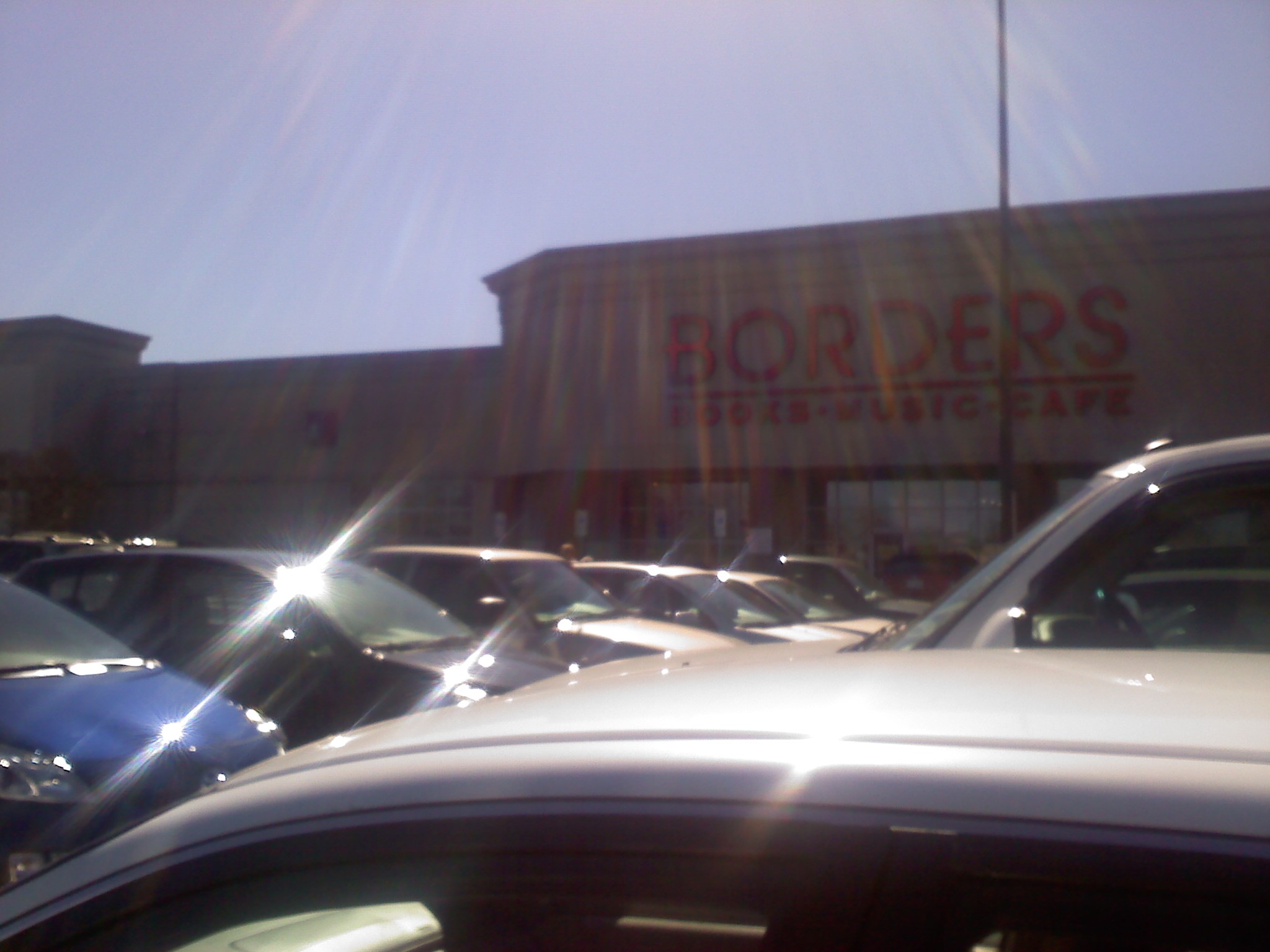
For many of you, your neighborhood Borders is just another part of the sprawburbia that has eaten our landscape alive in the past few years. However, for my neighborhood and I, Borders is more than a crappy overpriced bookstore and wannabe music store, it’s a gathering place, our true third space.
Just like our shopping mall down the street that’s undergoing a transformation into a mall for working and middle class people of color (well, the stores appear to make it look that way), the Borders in our neighborhood did the same. It stocked a high number of African-American literature. It provided the coffee shop experience in a neighborhood of chicken joints, bar-grills and fast food fantasies.
More importantly for me, it was the place where my love for reading and writing was born. In 1995, when our Borders was built, my parents were separating and I was adjusting to spending every other evening and weekend with one parent or the other. While my mom went off to her new part-time job at the fabric store, my dad and I went to the McDonalds across the street(or the Wendys or Burger King, only because they were cheap), then after bonding over a McFish Sandwich or McNuggets(even at 10, I couldn’t stand the burgers), we’d walk across the parking lot to Borders.
Walking in the store was something like I’d never seen before. I liked the library ok, but all the books were older. I liked the mall bookstore ok too, but they didn’t have comfy chairs and a mini amphitheater that I could just lay back on and read the latest Babysitter’s Club adventure, simultaneously forgetting about the sadness of having divorced parents, going to a new afterschool program and school where I was teased and living in a new apartment where I couldn’t go outside and play because of the mean kids downstairs.
Fast-forward to today. The shopping strip where Borders sits is going to be 75% empty when it’s gone. There are a few more big-box suburban stores that signal affluence, but in reality, we are in the middle of a suburban blight.
I walked into the store, trying not to cry. So many dreams and stories laid in it’s rafters. Already the store felt empty; the coffee shop had already been shut down. Yet, as I thumbed through books, none compelled me to walk up to the register and take them home. Instead I started a list called “Things to Put on My Kindle.” I considered buying a booklight, but realized I could order it cheaper on Amazon. However, I was determined to buy something in Borders one last time, so after checking out Rusell Brand’s Booky Wook 2 for kicks, I decided on a notebook with flower detailing and a folding clasp. I told myself “Maybe it’s time to write a new story, a new book, tell the story of your neighborhood and spread out to the world.”
With that mindset, I walked to the register, paid for my book and walked out for the last time.
RIP Greensboro Borders. You’ll be missed.








Pingback: Five Blogging Young Nonprofit Professionals From NC to Check Out « Tara L. Connolly