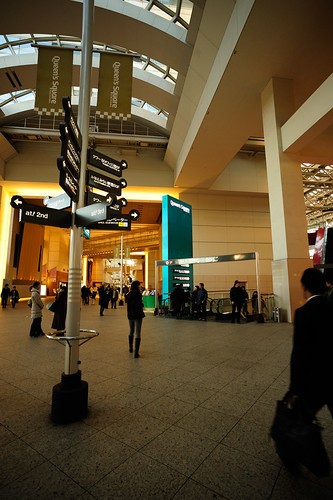
Image Credit: flickr user steven.y
As much as we hate them, I still do believe there is life in our traditional enclosed shopping malls and strip shopping centers. When these facilities opened, they were bright, shiny, air-conditioned and convenient. Supermarkets offered everything imaginable under one roof. Some even had lounges for spouses and kids, so harried housewives could shop in peace. They had tall smiling Santa’s and community Christmas trees. They invited the community in not only to shop, but to watch movies, jam at concerts and walk around for exercise.
Yet, we fast forward to the present day and many are blighted. Others aren’t dead yet, but have been pushed aside as unsustainable, uncool or dirty. I do agree that many were built with a few too many unsustainable stores. However for others, you have to admit the crowd inside didn’t suit your fancy, so you pushed for a more upscale shopping experience. You moved up in the world and your money and the stores followed. The owner stopped cleaning and lighting the property. Big time developers no longer want to clean and air-condition spaces, so they created these fake main streets that the elements can hose down and clean off. Of course there are the Circuit Cities, Linens and Things and K-Marts that just sit empty, because of those chains poor management of money.
Yet, I also see a different story. Story #1 is my mom. She gets up early on the days she doesn’t go to work or go to the doctor and walks around our nearby enclosed mall. If she wanted to, she could walk there in about 15, but she drives there in less than five. Story #2 is the Fanta City International Center in Greensboro. While not as shiny and occupied as it was when it first started, it’s goal has been to create a marketplace for our many refugee and immigrant communities. It’s a strip mall without a known anchor, but with it’s Super G Market, does a great job of being a Wal-Mart for foreigners. Lastly, there’s that mall in Cleveland that turned it’s enclosed mall into a greenhouse.
As I said before,many of the so called new urbanist “lifestyle centers” take a facade of a main street, but space the stores way too far apart in the name of parking. Also, these “main streets” are just as much private industry as the malls, meaning no loitering, photography or even legit public gathering after certain hours. Don’t get fooled by the planters and benches in the middle of the parking lot. And oh, isn’t that a Macy’s in one corner and a Nordstrom way across two faux streets? These centers aren’t new urbanism as much as they are corporate greenwashing and anchors for a lifestyle that’s not so sustainable anymore due to inability for families and even working single professionals to afford their wares.
Hence why I say that people aren’t killing the mall. Often it’s shop-owners who want a certain clientele and the developers who want to save money and make big bucks. Once these two people have wielded their muscle, its then the community that often says, hey, I don’t want to shop there anymore. For those of you who say it’s gangs killing off malls, I’ve noticed groups of young people of all types hanging out at both facilities. A man was killed in 2008 at an Old Navy at one of our lifestyle centers in Greensboro. This was after a person was shot in the 2006 at the traditional enclosed mall at the Baby Gap. Both of these cases were private disputes that came to the mall, not a protracted effort for people to come to the mall and shoot and harass people. There have been other cases, but I count those on one finger and once again, not a conspiracy to kill mall shoppers.
To close my thoughts today, If the mall is dying, then it’s dying not because of the tired “people want to shop at lifestyle centers and they want to be able to walk around and shop” meme. There is a need for adaptive reuse of the existing dead mall structures. You can blend the enclosed mall with a main street feel, case in point, the Streets of Southpoint in nearby Durham. It provides a good weather and bad weather shopping experience. Also, these places are still not public third space, but cities and towns can buy them up and create third spaces inside and around them. Older strips can be re-facaded and parking structures and homes can be added to the wide swaths of asphalt that surround them.
So what do you think, is the mall really dead? Are lifestyle centers faux-urbanism?