Urban Design Must Have Heart and Soul


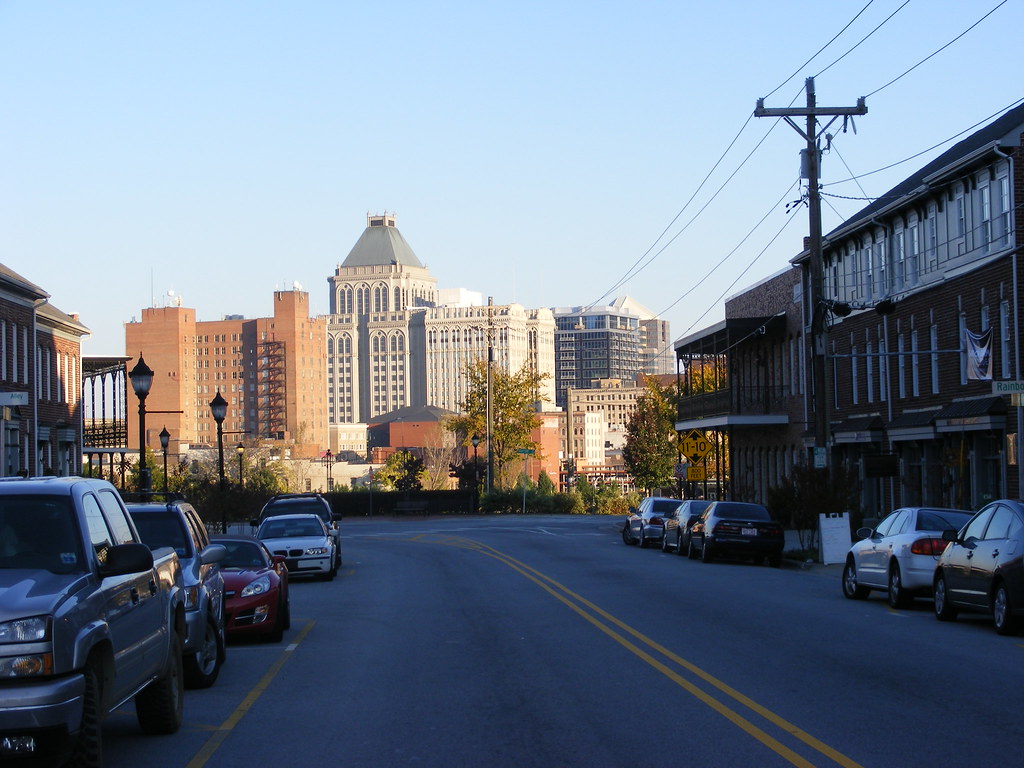
We must be careful that the Southside neighborhood and others like it, not fall back into the darkness at the expense of other vibrant neighborhoods, such as our traditional downtown (Image Credit: Unknown Flickr user via CityBoi at Skyscraper City Forums)

Recently the national-award winning, Duany Plater-Zyberk designed community of Southside in Greensboro lost a key tenant, Vintage 301. Outside of Manny’s Universal Café, this was the only restaurant in the neighborhood and only consistent draw of people outside of the small neighborhood inside. While there are a few hair salons and other small businesses left, the neighborhood has gradually gone from mixed use back to urban-esque suburbia.

I say this to deal with the idea that is at the core of much of new urbanism:

If you build it they will come + a cleaner urban form= success despite our economic and social failures

Yet, at the end of the day, many of us have no disposable income. We can’t sell our houses or afford to buy new ones. Some of us can’t even afford to rent homes, rent or buy cars or even eat. We want to start businesses, but you need money to do that too. Some existing business and homes are getting choked by the increased tax values. Cities are not working carefully with small businesses to deal with tax liabilities (yet continually give breaks to big ones who can more than afford to pay).

So what does one do in a situation like this? What does this mean for urbanism (and suburbanism and ruralism)? I’m not sure of all the answers, but it starts in one place, working together.

When we lose money and get poor, we often retract into the worse of ourselves. We hoard, we covet, we criticize. The fear of losing our identity swells far and above our own minds and makes us create false stories about our friends, family, colleagues and leaders. With this negativity, we find it hard to go on in our present state and we spend time over-analyzing how others seem to be getting along.

I think this negativity is at the root of where we stand as a country right now. However, I recently learned that no matter what, it’s better to be grateful for what does exist. Even though I can’t rent a house, I am able to live with my mom and help her with things at our house. The bus still runs from 5 AM to 11PM here in Greensboro and 24 hours in some places. I could ride a bike. And at the basic level, I’m breathing, seeing, walking and talking and writing this post.

To bring this tangent back to a close, we have to look past the built environment for a minute and work on restoring the souls of our fellow community members. We have to have hard conversations and ask hard questions. We have to make hard demands. Yet, I don’t know of a person who has some means, yet is complaining about lost of livelihood, that doesn’t have something they can share. Maybe it’s a shoulder to cry on, an extra shirt, an extra plate or a ride to work.

Still, we will not be able to fill our communities and embrace a density until we desire to live in harmony again. A harmony that looks past differences in matters of the heart and makes sure people can have the freedom to wake up and live comfortably.

Just like I called on DC residents on Twitter to do, it’s not about race-baiting, it’s not about keeping improvements off the streets, it’s about getting our city economics back on track, and remembering all legal business is good business. Even if it’s just an upscale wing joint that moves into the old Vintage 301 space.

The Black Urbanist is written by me, Kristen E. Jeffers. I hold a Master of Public Affairs focused on community and economic development from the University of North Carolina Greensboro, which I just finished in May of 2012. I graduated with a Bachelor of Arts in communication with a concentration in public relations from North Carolina State University in 2007. My main gig is being the Public Affairs Officer for the North Carolina Humanities Council, which I also started in May of 2012. I released my first e-book, "Killing the Civic Inferiority Complex" in May of 2012. In May of 2011 I presented at my first CNU NextGen on Cultural Urbanism. At the 2012 CNU, I debuted the concept of the Civic Inferiority Complex. Also in 2012, I spoke at the UNC Global American South conference on the reverse migration of African Americans. I am a featured contributor to "The Atlantic Cities" and "Sustainable Cities Collective." I have also contributed articles to "Grist", "Next City", "Better! Towns and Cities", and "Urban Escapee."
pub-8897335176358686
  • http://twitter.com/ridwankamil/status/93306987760205824/ @ridwankamil

    Seperti Kota Gede di yogya. RT @SIGkusumawijaya: Urban Design Must Have Heart and Soul http://p.ost.im/p/ee2KXG | RT @blackurbanist"

  • http://twitter.com/StirnaGun/status/93368315447214080/ @StirnaGun

    Urban Design Must Have Heart and Soul | The Black Urbanist: http://disq.us/2nz1nq

  • http://twitter.com/AttainableHomes/status/93393440687144960/ @AttainableHomes

    Urban #Design Must Have Heart and Soul http://p.ost.im/p/ee2KXG via @blackurbanist

  • Kenf

    That “upscale wig joint” can help activate the street. Even if you are not in the market for a wig looking in the window can be interesting and fun.

    • admin

      True, i think I said wing, but still, wigs are also something that’s outside the day-to-day “mainstream” economy

  • Bruce Donnelly

    Duany Plater-Zyberk.

    • Anonymous

      It’s fixed, thanks Bruce!

  • Ryan

    I’d have to challenge the businesses math for this. There are 20+ businesses being run out of Southside… and those hair salons… they stay very busy.

    • Anonymous

      True, but the goal of the design firm, as well as any new urbanist neighborhood like Southside, is for people to be able to do everything in walking distance. I don’t doubt that there are successful businesses still in Southside, but until Deep Roots moves downtown, there won’t be adequate grocery. Also, there’s the perception problem. With the six+ businesses closing in the last six weeks, plus what just happened in Washington, there are quite a few more people that will be hesitant to purchase. Thinking of the average Greensboro citizen and not us, makes me worry about what will happen with Southside.

The Case for a Lazy Urbanism

Urbanism should be second nature, not bound by jargon or complex activities.

Development Types Are Not an Euphemism for Race

ShareDuring a conversation at the recent Streetsblog training in Kansas City, I mentioned again the story of why the site [...]

Transit + Roof + Food + Education + Job + Proximity + Sense of Place = Good Life. A Broken Equation?

It shoudln’t be, but sadly, in many cities, it is.

Guest Post: Yes, A City Can and Should Have It All.

Graham Sheridan, masters candidate in public administration at Brown University, takes my civic-infereiorty complex to task and demands that a city can and should have it all.

Why Do Southerners Go Crazy Over Snow?

Because it happens just enough to both enchant us and drive us crazy.

Mixed-Use Ain’t Always Pretty

Let’s not fall into the trap that mixed-use is only a building code or type.